Every manuscript, archival collection, and historical record tells a story—but not every story is equally easy to find.
The philosophy that guides my work began during my doctoral research in early medieval English studies. After spending much of a semester developing my dissertation prospectus, building an extensive outline, and establishing the framework for my dissertation, I realized something wasn't right. My project examined women’s social networks in early medieval England, yet much of my evidence came from sources written by men. I found myself asking a simple but transformative question: What would change if women's own writings became the foundation of the project?
Answering that question meant setting aside months of work and beginning again. Rather than continuing with a framework I no longer believed in, I paused my writing and devoted two weeks to searching for primary sources authored by women. It was an uncertain decision. I worked through manuscript editions, archival catalogs, documentary collections, bibliographies, indices, and footnotes, often following a single reference in the hope that it would lead to another source. Although I still had more than a year before completing my dissertation, choosing to rebuild the project from its foundation required both time and confidence that the search would ultimately strengthen the scholarship.
It did.
The sources I discovered transformed my dissertation, allowing women’s wills, letters, charters, legal documents, and hagiographical writings to become central to my analysis. More importantly, the experience transformed my understanding of archives. I came to appreciate that discovery rarely happens by accident; it depends on careful description, thoughtful stewardship, and the willingness to ask new questions of familiar collections.
That experience continues to shape my work as an archivist and librarian. Whether preserving collections, teaching with primary sources, designing outreach initiatives, or supporting researchers, I believe libraries and archives are places where curiosity is rewarded, evidence invites new perspectives, and meaningful discoveries begin with the courage to ask better questions.
A Philosophy Shaped by Discovery
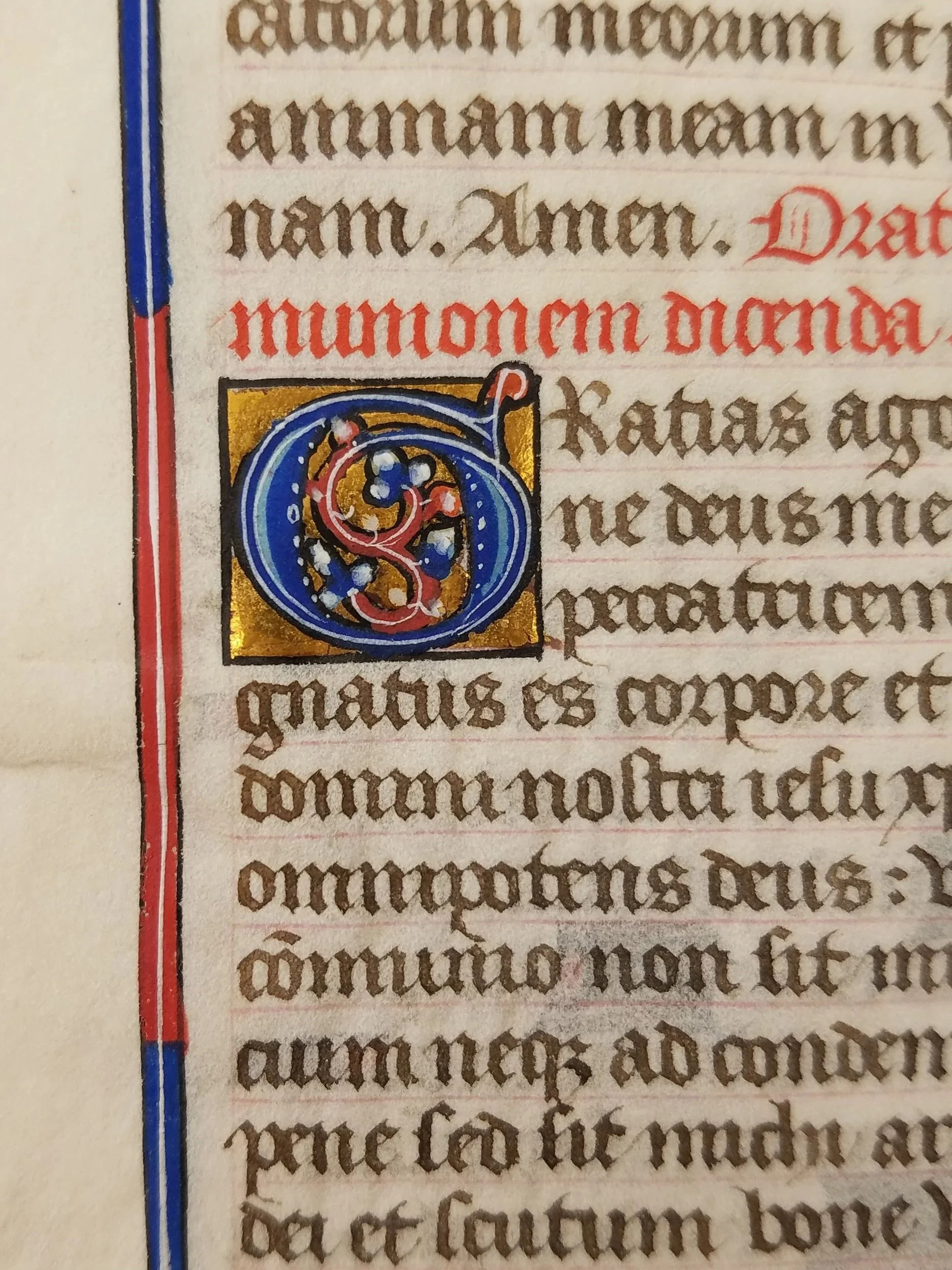
My Philosophy
Archives are more than repositories of historical records.
Libraries are more than collections of books.
Both are places where people encounter knowledge, ask questions, and build new understandings of the world.
My philosophy is motivated by a simple question:
How can we preserve cultural heritage while making it easier for people to discover, interpret, and engage with it?
This question connects every aspect of my career aspirations—from medieval manuscript research to library outreach, archival description, information literacy, and assessment.
The road so far: Special Collections Library Assistantship → PHD → MLS → Outreach and Assessment →The Future
Elements of My Philosophy
I believe archives and libraries preserve more than documents—they preserve human experience.
My professional philosophy focuses on ensuring historical materials remain discoverable, interpretable, and accessible for future generations.
-
Rare books are more than historical artifacts—they are evidence of how knowledge has been created, preserved, and shared across generations. I am fascinated by the ways physical books communicate information beyond their texts through their bindings, annotations, provenance, and material construction. Working with rare books has taught me that every volume tells multiple stories, not only about its contents but also about the people who produced, collected, and used them. My research explores how these objects preserve cultural memory while inviting new questions from contemporary scholars.
-
My scholarly work has centered on manuscripts because they preserve voices that might otherwise have been lost to history. Through the careful study of medieval texts, legal records, correspondence, and other primary sources, I investigate how historical narratives are constructed and reconstructed across time. Manuscripts remind us that archives and libraries are never complete; they challenge us to piece together fragmentary evidence while remaining attentive to the people whose stories survive only in scattered traces.
-
Exhibitions transform archives and libraries from repositories into spaces of dialogue. I believe exhibitions should do more than display historical materials—they should invite visitors to ask questions, make connections, and discover why cultural heritage remains relevant today. Whether physical or digital, exhibitions create opportunities to interpret collections in ways that encourage learning, curiosity, and public engagement while broadening access to archival resources.
-
Archives preserve our collective memory, but preservation alone is not enough. My interests extend beyond collecting historical materials to understanding how accessioning, arrangement, description, metadata, and finding aids influence what researchers are able to discover. I am particularly interested in archival accessibility and the ways thoughtful description can make collections more visible while respecting historical context, professional ethics, and the integrity of the historical record.
-
Digital collections create new opportunities for scholarship by extending access beyond the reading room. I am interested in how digitization, digital exhibitions, and online discovery tools enable broader engagement with cultural heritage while preserving the context and authenticity of original materials. My work seeks to balance technological innovation with the enduring values of archival stewardship.
-
Primary sources encourage students to become investigators rather than simply consumers of information. I enjoy designing learning experiences that invite students to analyze original materials, ask their own questions, and develop confidence in working with archives and special collections. Teaching with primary sources fosters curiosity, critical thinking, and a deeper appreciation for the complexity of historical evidence.
-
Archives and libraries have the greatest impact when they are actively used and shared. My outreach philosophy emphasizes meaningful relationships between collections and communities through collaborative programming, exhibitions, and experiential learning. I strive to create welcoming opportunities that help new audiences discover the richness of archival and library collections while encouraging lifelong engagement with cultural heritage.
-
Rather than viewing archives simply as repositories of information, I see them as spaces where new questions emerge. My research explores how systems of preservation, organization, and access shape historical memory, scholarly inquiry, and public understanding. Across medieval studies, archival practice, and librarianship, I am interested in how archives influence not only what we remember, but also what remains hidden—and how thoughtful stewardship can help recover those voices.
Assessment
Using Evidence to Strengthen Libraries, Partnerships, and Learning
-
Assessment is often viewed as the process of collecting statistics, measuring attendance, or completing institutional reports. While these activities are important, I believe assessment serves a much broader purpose. At its best, assessment helps libraries better understand the communities they serve, evaluate the effectiveness of their work, and make informed decisions that strengthen learning, research, and engagement.
My approach to assessment is grounded in the belief that evidence should support reflection rather than simply document activity. Every outreach initiative, instructional program, exhibition, partnership, or service creates an opportunity to better understand how people interact with the library and how the library contributes to the broader educational mission of the institution.
Rather than asking only "How many people attended?" I am interested in questions such as:
How did participants experience the program?
What barriers to access or engagement became visible?
How did the initiative strengthen relationships across campus?
What evidence demonstrates meaningful learning or impact?
How can the findings guide future decision-making?
By approaching assessment as an ongoing process of inquiry, libraries can continuously refine their services while demonstrating their value to students, faculty, administrators, and the communities they serve.
-
I believe effective assessment should be:
Purposeful
Assessment should begin with meaningful questions rather than available data. Every project should identify what success looks like before selecting appropriate methods for measuring outcomes.
Collaborative
The strongest assessment initiatives are developed in partnership with faculty, students, campus offices, and library colleagues. Shared goals produce more meaningful evidence and strengthen institutional relationships.
User-Centered
Assessment should prioritize the experiences of library users. Quantitative data provides valuable context, but understanding how people experience library services often requires listening carefully to their perspectives through qualitative methods as well.
Action-Oriented
Collecting data has little value unless it informs future decisions. Assessment should support continuous improvement by identifying opportunities to refine services, strengthen partnerships, and enhance learning experiences.
Sustainable
Successful assessment practices become integrated into everyday library work rather than existing as separate reporting activities. My goal is to develop practical, repeatable processes that generate useful evidence while remaining manageable for library staff.
-
My professional interests include:
Library outreach assessment
Student engagement and belonging
Information literacy assessment
Partnership development and evaluation
Program assessment
User experience and service improvement
Strategic planning
Organizational effectiveness
Evidence-informed decision making
Demonstrating library impact on student success
-
As libraries continue to evolve, assessment plays an increasingly important role in demonstrating institutional value while supporting innovation. I am particularly interested in developing assessment models that combine quantitative and qualitative evidence to better understand how libraries contribute to learning, scholarship, community engagement, and cultural heritage preservation.
For me, assessment is ultimately about curiosity. It asks us to move beyond assumptions, examine evidence thoughtfully, and continually improve the ways libraries serve their communities. When approached as a reflective and collaborative practice, assessment becomes one of the most powerful tools libraries have for strengthening both their services and their relationships with the people they support.